Parental Mental Health Tips

Across the behavioral health field, we recognize the importance of offering support to caregivers, whether they sought our help on behalf of their children or for themselves. We also know there are many caregivers who don’t walk through our doors who need and deserve help. In August, U.S. Surgeon General Vivek Murthy issued an advisory on the mental health and well-being of parents and guardians. “(Caregivers) are navigating traditional hardships of parenting — worrying about money and safety, struggling to get enough sleep — as well as new stressors, including omnipresent screens, a youth mental health crisis and widespread fear about the future,” Dr. Murthy wrote in a New York Times opinion column at the time of the advisory’s release. When caregivers come to us with these concerns, Brightli’s partners help the full families of the clients we serve to thrive. Whether that’s by providing childcare in recovery services inpatient facilities, connecting caregivers of youths in substance use recovery with family support specialists, offering safe and judgment-free group therapy options tailored to caregivers’ issues or through other avenues, we strive to help. Below, you’ll find tips and support opportunities from our behavioral health experts that can help anyone address some of the key issues presented in the surgeon general’s advisory. Ways to build community and address loneliness among caregivers Two-thirds of parents say they don’t talk about their stress for fear of burdening others, according to an American Psychological Association study cited in the advisory. At the same time, parents and guardians – and especially single parents and guardians – experience loneliness at higher rates than other U.S. adults. Loneliness is a challenge many autism caregivers can experience as they address situations that are new to them, said Seth Allen, a leader in Autism Services at Brightli. “It is really important for autism caregivers to get connected with supports for their own well-being and self-confidence,” Allen said. His team works to create support groups among clients and to also point clients to groups in the communities he serves. Intentional connections can benefit any caregiver experiencing loneliness. Here are some ways caregivers can build them: Building your child’s self-worth can help you build your own Keylee Tesar, who helped establish a program that strengthens relationships among foster and adoptive parents and their children, said that empowering children to believe in themselves also helps caregivers nurture their own sense of self-worth. “When we show children love, respect and encouragement, we remind ourselves of our own strength and value,” Tesar said. The program features an element called “character praise,” in which caregivers highlight and celebrate behaviors they see in their children that they want to flourish. Some examples include: Character praise not only enhances positive behaviors in children, but also provides immediate rewards for caregivers by activating the brain’s reward system through the release of dopamine and oxytocin. This practice boosts mood and reinforces positive behavior while fostering connection and well-being for caregivers and children. Practicing character praise with the caregivers in your life can provide similar rewards. As the surgeon general’s advisory reminds us, “Caregivers need care, too.” Practice the six elements of self-care Amy Hill, a leader in youth learning and development, has worked with caregivers for years to address their stress levels and improve mental well-being. She encourages caregivers to practice these six elements of self-care (with examples included): As a whole, Hill said, they can help you practice mindfulness and become more aware of thoughts, feelings and the surrounding environment in the moment. Mindfulness has been shown to reduce stress, improve mental focus and boost compassion, among its benefits. It takes a village to care for a child; we want to contribute to yours Our Be Well team offers a monthly Self-Care Challenge, an activity designed to help you improve your mental health through intentional practices. November’s challenge is tailored to caregivers and offers a Bingo card filled with activities that offer caregivers time to take care of themselves so they can continue to best support our youth. They include items like: You can access the full November Self-Care Challenge anytime you need it by clicking this link. And you can keep up with the latest Be Well efforts by bookmarking bewellcommunity.org. It’s OK to seek professional help. Caregivers are doing the best they can with the information, resources and experiences they have had in their lives. Giving parents a safe and judgement-free space to learn, grow and heal benefits them, their children and the community. That space is available in a therapeutic behavioral health setting. If you need help, please reach out to our professional team to learn about the many options we offer. If you need immediate help in a crisis, it is only a call or text away by dialing the 988 Suicide and Crisis Line.
Veteran’s Day 2024
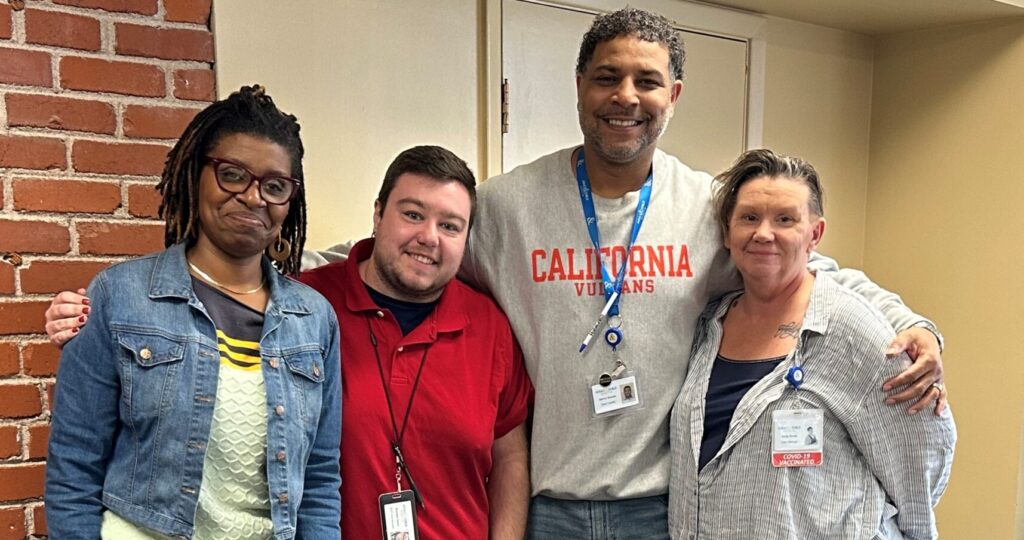
November 11th became a nationally recognized day to honor and acknowledge the contributions of all living American Veterans in any branch of service when Public Law 380 was approved on June 1, 1954. Since then, communities throughout the United States have celebrated with parades and ceremonies to show gratitude for those who served their country. Veterans take many risks in the line of duty that take can take a toll not only on their physical health, but also their mental well-being. Exposure to high-stress situations, long periods of time away from home, Military Sexual Trauma (MST) and difficulties in adjusting to civilian life after service are just some of the factors that can contribute to poor mental health for veterans. An increasing number of veterans experience anxiety, depression, post-traumatic stress disorder (PTSD), and/or substance use disorders, which can sometimes lead to additional difficulties such as poverty or homelessness. Please click here to see statistics provided by the Housing Assistance Council. For over 12 years, Adult & Child Health (A&C) has provided necessary care and resources through the Supported Services for Veteran Families (SSVF) Program, having served over 400 Hoosier veterans and their families this year alone. The purpose of the SSVF program is to promote housing stability among low-income veteran families who reside in, or are transitioning to, permanent housing. In addition to providing housing assistance, the program provides services that include (but are not limited to) the following: case management, assistance to obtaining other VA services/benefits, financial planning, food resources, transportation, childcare, linkages to primary and mental health care, and outreach. Our SSVF teams serve Marion, Johnson, Boone, Clay, Hamilton, Hancock, Madison, Parke, Tippecanoe, Shelby, Sullivan, Vermillion, and Vigo counties. Please click here for an informational flier that includes program qualifications. In addition to serving Indiana veterans, A&C is proud to have several veterans on staff including Emily Pence and NaTasha Allen who have shared their experiences for a special Veterans Day Employee Spotlight. It is with tremendous gratitude that we honor Emily, NaTasha, and the thousands of others who have served our country. Thank you for your service. Employee Spotlight: Emily Pence I was a member of the United States Army (Hoah!) in April 1989 and ended my service in June 1990. I initially began my service in the Delayed Entry Program (DEP), then went to Fort Jackson in North Carolina (as it was named at the time) for basic training. Afterward, I went to Fort Bliss in El Paso, Texas to complete my A.I.T., which job-specific training – my Military Occupational Specialty (M.O.S.) was Patriot Missile Crew Member. I served in this role in Ansbach, Germany for my permanent duty station. While stationed in Germany, I personally experienced an event with one of my leaders, memories of which led to my developing Post-Traumatic Stress Disorder (PTSD). My lived experience as a veteran with a diagnosed mental health disorder has allowed me the unique capability to assist veterans who have gone through similar situations while understanding “veteran talk.” Employee Spotlight: NaTasha Allen I served in the served in the US Army for a total of three years. I entered the military as a Private and later transitioned to a Non-Commission Officer (NCO) with the rank of Sargeant. While stationed at Ft. Campbell, KY, 101st Airborne/Assault Division, I deployed to Iraq during Operation Iraqi/Enduring Freedom and completed two tours in Iraq war zones – Kuwait, Mosul, Q-West, Baghdad, and beyond. My military time taught me strength, courage, and the importance of perseverance despite obstacles. I learned to speak up for myself, to see my worth and value rather than viewing myself as “just a number”. It taught me leadership, compassion, discipline, and the true value friendship. These skills have allowed me to be empathic with Veterans from all walks of life – from Privates to Generals, everyone’s treated with respect and dignity, without judgement of age, race, ethnicity, gender, beliefs. In my current role at A&C, I have the privilege to meet with Veterans where they are in their journey of healing and recovery to provide support and resources as they work toward adjusting to civilian life.
How to care for YOU this election season.

Your vote matters, and so does your mental health. We live in a time of information overload — 24-hour news cycles, unlimited access to social media and our own personal stresses of daily living. Add in a presidential election year and it is no wonder that a survey from the American Psychiatric Association reported that 43% of U.S. adults are feeling more anxious in 2024 than they did in 2023 (American Psychiatric Association, 2024). Feeling more emotions around an election season is normal and can help us stay engaged in the political process. However, living with these intense emotions for too long can take a toll on our well-being. No matter which side of the political spectrum we’re on, many of us feel stressed by the state of American politics. A recent survey showed 73% of U.S. adults feel anxious about the upcoming election, and 53% said it’s affecting their mental health (American Psychiatric Association, 2024). So, how can we stay engaged with politics while also caring for our well-being?How Stress Affects UsOur brains are built to handle and even benefit from short bursts of stress. In small doses, stress can help us focus, tackle challenges, and grow as people. However, when we experience long-term stress, it can negatively affect our brains and bodies. We might start to notice muscle tension, difficulty with sleep or headaches. Over time, stress can even weaken our immune systems, leading to stomach issues, heart disease, weight gain and increased risk of stroke (APA, 2023). How to manage stress this election season. 1. Set boundaries around social media.“Setting boundaries” is a trendy phrase, but how do we limit our social media to help our mental health? Social media is often at our fingertips, so it can be easy to get caught in a doom scroll. Try This: 2. Be mindful of the type and amount of news you take in.We can get news any time, any place and anywhere, but this constant intake can take a toll on us. Try This: 3. Keep it in perspective.It’s easy to find ourselves in information overload and unsure of what we can do to make a difference. This can leave us feeling helpless. Try This: 4. Take care of YOU.When we take care of ourselves, we have more energy to care about what is happening in the world around us. Think about what has helped you manage stress in the past or try a new activity. Try This: References
Adult & Child Health, Mental Health America of IndianaAdvancing Peer Recovery Efforts Statewide
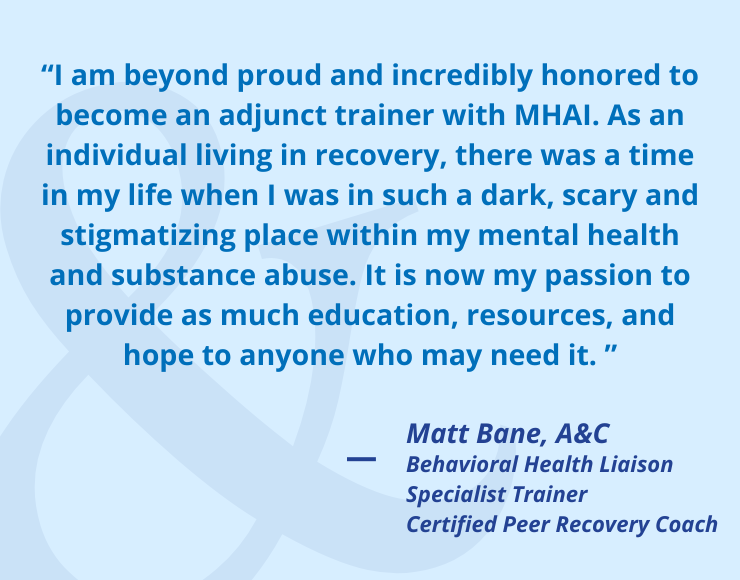
Integrated healthcare provider Adult & Child Health (A&C), ICAADA, and MHAI Stanley W. DeKemper Training Institute (MHAI SWD TI) have entered into an Agreement for Educational Partnership to advance the recovery support workforce within the state of Indiana by increasing training opportunities through MHAI Stanley W. DeKemper Training Institute for Indiana residents to become certified as Certified Peer Recovery Coaches (CPRCs) or Certified Recovery Coaches (CRCs) through ICAADA. This effort is one of the commitments made by A&C as a recipient of the DMHA Workforce Recruitment and Retention Innovation Grant through which A&C was awarded $750,000 in fall of 2023. “This groundbreaking partnership between Adult & Child, ICAADA and MHAI SWD Training Institute shows their passion for increasing the recovery support workforce and, most importantly, increasing accessibility to care across Indiana. By using trusted, and vetted, recovery support training and credentialing organizations, along with a respected recovery support provider such as Adult & Child, we will be able to create a workforce development structure that increases the recovery support workforce while supporting sustainability of the recovery support profession,” said MHAI Vice President of Education and Credentialing Justin Beattey. In January 2023, the annual National Survey on Drug Use and Health (NSDUH) reported 9.2 million people aged 12 years or older had misused opioids in 2021, 94 percent of which did not receive any treatment; additionally, adults aged 18 to 25 had the highest rate of mental illness yet the lowest rate of treatment. The need for addictions recovery and mental health services is tremendous and increasing the number of people who are trained and qualified to provide those services through the peer support approach is critical to closing the gap. Additionally, peer support is proven to be an affective form of recovery treatment, resulting in reduced re-hospitalizations, fewer days spent in inpatient care and increased quality of life (Evidence for Peer Support, MHA, 2019). CPRCs provide recovery support and care for individuals who are experiencing challenges with mental health and/or substance use disorders by connecting with others through a direct lived experience of similar challenges. While CRCs do not have direct lived experience, they have often been indirectly affected by addiction or mental illness through a family member or friend. Direct nor indirect experience is a requirement for individuals to become CRCs – many folks in this role simply have a passion for helping those in need. “I am beyond proud and incredibly honored to become an adjunct trainer with MHAI. As an individual living in recovery, there was a time in my life when I was in such a dark, scary and stigmatizing place within my mental health and substance abuse. It is now my passion to provide as much education, resources, and hope to anyone who may need it. This new program not only provides me with another opportunity to do just that, but it also helps to emphasize the importance of peers in behavioral health throughout the state. As a representative of my amazing employer Adult and Child Health and of MHAI, it is my mission to act as a voice for anyone who might not yet have found theirs and to do this to the best of my ability every single day – it is a great honor to be able to do so,” said Matt Bane, A&C, who will be one of two training facilitators. # # # About Adult & Child Health Adult & Child Health, a Joint Commission accredited community mental health center and Federally Qualified Healthcare Center Look Alike (FQHC) in Central Indiana, strives for caring communities where all people can live healthy, purposeful lives. Services include behavioral health, primary care, social services, and addictions treatment, all of which are designed to provide quick, affordable, and efficient access to high quality care. Adult & Child is an affiliate and member organization of Brightli, a network of health providers across the Midwest. Please visit adultandchild.org for more information. About ICAADA ICAADA, a subsidiary of Mental Health America of Indiana, provides credentialing for behavioral health professionals. ICAADA provides behavioral health professionals with credentials, membership, and advocacy that validate the professionals’ competencies to provide person-focused, evidence-based behavioral health services. About MHAI Stanley W. DeKemper Training Institute The MHAI Stanley W. DeKemper Training Institute is our partner in providing quality education for behavioral health professionals and the community. The Training Institute works tirelessly to ensure that the education provided meets the standards and competencies required for aspiring and current behavioral health professionals, to maximize the outcomes for the populations they serve.