Spotlight on: Therapeutic Foster Care

In the wide scope of Adult and Child, at times it can seem that the Therapeutic Foster Care team exists its own bubble. The team has a separate brand and a separate website and answers to an outside entity (DCS). But in reality, foster care is deeply intertwined with several other service lines, from home-based services working with biological families to primary care looking after children’s medical needs. Housed on the seventh floor of 603 E Washington St, the TFC team is fortunate to have such easy access to various other A&C service lines. In Indianapolis, there are around eight foster care agencies, but Adult & Child is the most comprehensive. “Most agencies have to refer out for services, but A&C can literally take care of all that under the same roof,” said Alicia Harding, a TFC team leader. This type of open communication is often a resource for getting quick answers to questions or being able to streamline care for children with trauma and/or other health problems. The integrated care aspect and novelty of child therapy can be a draw for prospective foster parents looking for a support system when embracing such a challenging role. TFC is always working to keep its foster parents afloat in uncertain waters. “As an agency we really are striving to support and work with foster parents in an ongoing process, to work hand in hand for the benefit of the child,” said Amanda Vipperman, licensing specialist and team leader. Amanda also keeps track of much of the data on how many foster parents are coming into the agency. Currently, there is an average of 10 new inquiries a month from prospective foster parents and an average of two certifications per month. Alicia Harding commented on the disparity of these numbers: “It is a long process and it feels very invasive at times… You do feel vulnerable throughout the process and I don’t think a lot of people like to feel vulnerable.” In this process, foster parents must go through background checks and be prepared to discuss in great detail: their finances, their home life, their relationship, etc. It also takes a lot of effort and time to become a licensed foster parent. The entire paperwork and interviewing process alone takes roughly 20 hours. But at its heart, all these hurdles are in place to make absolutely sure that the home is a stable and safe environment for children. Through the process, the TFC team tries very hard to make sure prospective foster parents feel comfortable and supported in an attempt to keep them moving toward their goal. “There is a huge, huge need for foster parents right now for kids in our community,” said team leader Jodi Kelley, referencing the fact that there are currently more foster kids than there are homes to put them in. There has been a push from the agency to spread this message and to encourage people in the community to reach out for more information if they have ever considered fostering. Being a foster parent can be a wonderful and life-enriching experience for many, but there are darker realities that prospective parents should prepare for when looking into the process. Many people come to fostering with the desire to give back and help a child, “but what they don’t realize is that it takes a lot of working with what feels like a broken system,” said Alicia. “And it’s never going to be a perfect system when you take a child and traumatize them further by removing them from the only home they know.” She noted that to make the best of it and stay positive, foster parents must also practice self-care and to not take themselves too seriously. She notes that foster care looks different for everyone and it’s so important to be adaptable. “It’s hitting a moving target always, but it can definitely be done.” More info on A&C’s foster care program at indyfostercare.org.
Zero Suicide: A New Focus on Prevention
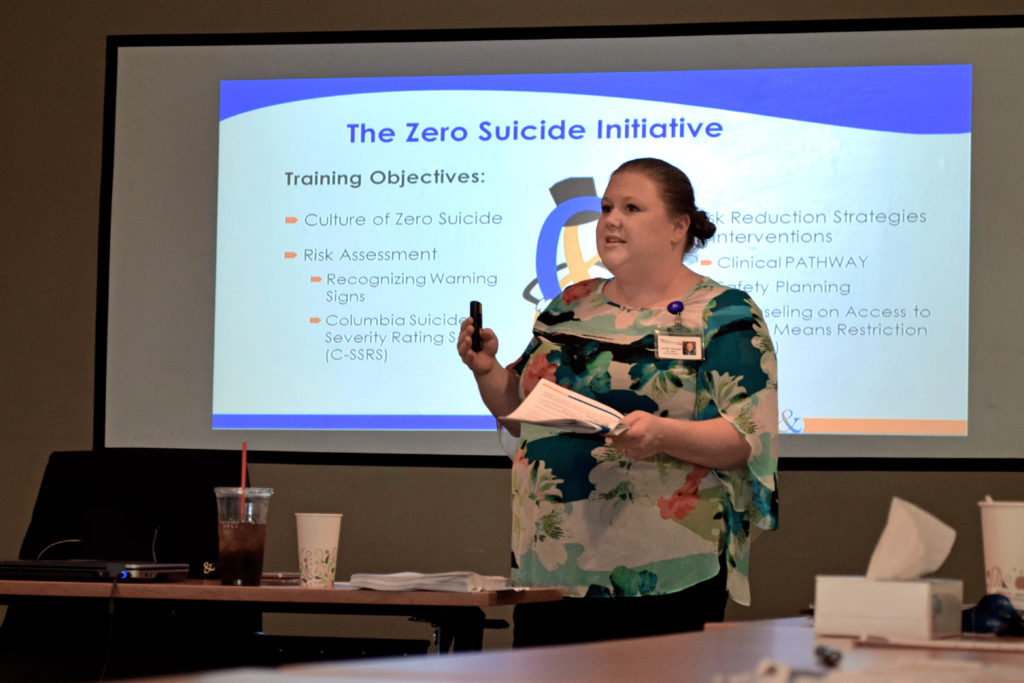
“[My client] is classified at A&C as a “high risk.” He’s expressed suicidal thoughts and suffers from traumatic brain injuries, debilitating spinal pain, and other serious conditions.” “A client was initially seen for an intake by the Neighborhood Team, endorsing [suicidal] ideation without intent. The team worked collaboratively to develop a safety plan, CALM, and provided relevant psycho-educational materials in the respective language. The client left the appointment, but later felt triggered, and decided to return to A&C downtown clinic.” These are quotes from employees of A&C. So many of us work with clients every day who have struggled with thoughts and plans of suicide. Unfortunately, this is common in the world of behavioral health. Mental illness is the driving force of almost every suicide, and any agency worth its salt is going to screen all clients for this risk. But is that enough? Indiana is far above the national average in suicide attempt and completion rates. It is the 2nd leading cause of death for people ages 15-34. The state has the nation’s highest rate of students who have contemplated suicide at 19% and the 2nd highest rate of attempts at 11%. With numbers like this, it feels crucial to take a look at our methods for detecting suicide risk and ask ourselves how we can do better. Enter Zero Suicide. Developed by the Suicide Prevention Resource Center, it’s a model of care meant to bolster the effectiveness of an agency’s suicide prevention plan. A&C was introduced to this model through a learning community where different organizations across the country share and discuss ways to improve practices. The Substance Abuse and Mental Health Services Administration (SAMHSA) chose to fund Zero Suicide implementation for a few learning community participants, and A&C was selected. “It was a natural fit,” said Matt Oliver, A&C’s Chief Clinical and Informatics Officer and chair of the Zero Suicide Committee. He and the nine other members of the ZS Committee have now worked for over a year on implementation. While a year sounds like a long time, this effort is organization-wide, meaning that every one of the 700+ Adult & Child employees must be trained. September has been the month of ZS training. Employees who work one-on-one with clients in the clinics, in therapy sessions, skills sessions, etc. have completed classroom trainings. Anyone working behind the scenes has taken an online training course. Staff members are trained to look for indicators of a potentially suicidal person and then taught what questions to ask to determine risk. “We don’t want people to slip through the cracks,” said Matt. If someone expresses suicidal intent, they are placed on the ZS Pathway, a process taught to direct care staff during classroom trainings. The Pathway is designed to fortify clients with several different levels of support including weekly check-ins from A&C’s Crisis Team, enrollment in therapy, and creation of a Safety Plan providing steps to take when experiencing suicidal thoughts. Even after clients improve and are removed from the Pathway, they are still working with primary care providers and receiving supplemental support from the Crisis team. Equally important to adopting the Pathway model is shifting A&C culture around the topic of suicide prevention. Part of adopting ZS into an organization is for employees to understand that every suicide is preventable and that prevention is part of everyone’s job. Teaching staff how to detect and offer help to those struggling with suicidal thoughts is important to build up confidence around the topic. A staff confident in their prevention knowledge and plan of action is what success in ZS looks like. With suicide being such a large problem in young people, A&C’s ZS push will involve more emphasis placed on detecting risk in youth. Some may think that talking to kids and teenagers about suicide will introduce them to the idea, but this is a myth. With the statistics that we have, it’s the reality of teenagers’ lives to experience thoughts of suicide. The majority already have passing thoughts about it from time to time. For many it’s not a serious issue, but for those who may be struggling, we never want to feel too squeamish to do a safety check-in. Matt Oliver says he hopes this effort will make a dent in the Indiana statistics. “We’d like suicide to be a never event,” he said. After all of the training wraps up at the end of September, the official date Zero Suicide goes into practice is October 1st. After that, it is to remain an ongoing standard within the A&C culture. The ZS model is the first formal Pathway the organization has adopted, and its success is likely to set the stage for other formal Pathways in the future.
Spotlight on: School Based Services
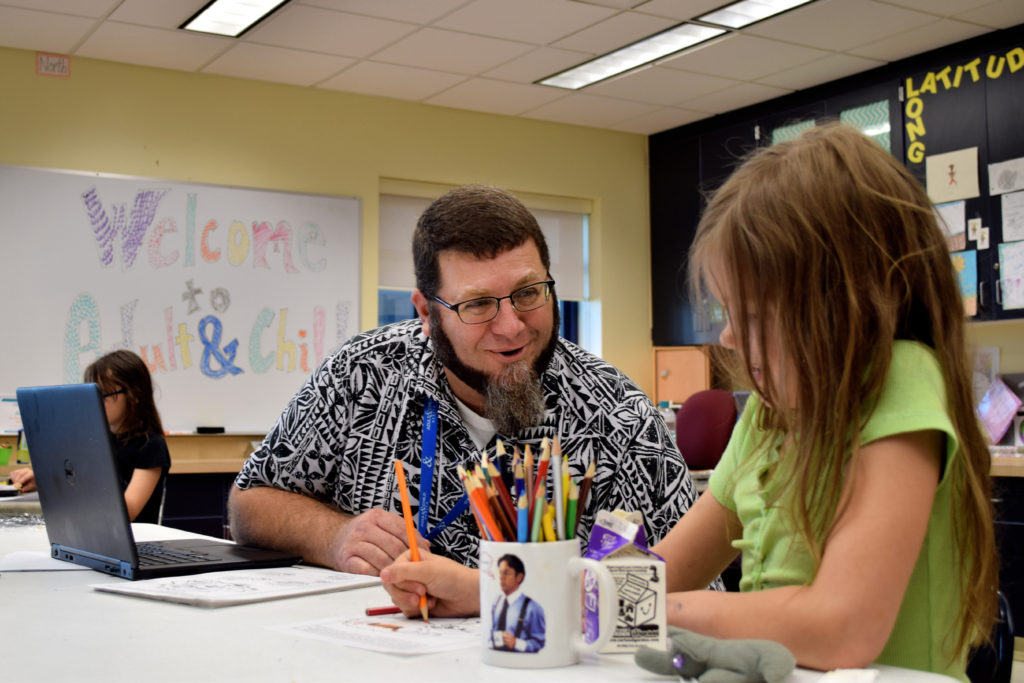
The philosophy of School Based is simple: problem kids are not bad kids, they’re kids who simply need more support. This is the very sentiment Skills Development Specialist Chad Ridge tries to embody daily as he winds through the halls of Grassy Creek Elementary throwing out high fives to children passing in lines and advice to ‘make better choices’ to those working at ‘time out desks’ in the hallway. As a Skills Development Specialist, Chad has a unique but often necessary position in the school. He helps kids on his caseload work through issues such as ADHD, Oppositional Defiant Disorder, a tendency to flee, a tendency to hit. Therapists on the team do the hard, emotional work with the kids one-on-one to help them address what they feel and why they feel it. Skills Development Specialists (SDS) work with the kids on their actions and how to make better behavioral choices, both in one-on-one sessions and in the classroom. “You kind of have to play a little dance with your caseload,” said Chad, referencing the relatively unstructured day-to-day operations of a Skills Development Specialist. There are a certain number of meetings they must have with their clients per week depending on their level of need, but the landscape always seems to be changing. The caseload rotates slowly, but teachers have different preferences, schedules for extra activities blend and shift, a client may have an outburst in the morning, or an emergency might pop up in the afternoon. Chad manages by staying flexible and spending his day weaving in and out of classrooms, talking with teachers and dropping in on clients to assess the needs of the day. “You have to feel out who needs what at what time and adjust accordingly.” Kids usually end up on the School Based caseload through a teacher recommendation. Teachers approach parents about working with Adult and Child to help their child tackle behavioral issues. Often the option is discussed when working out Individualized Education Plans. When a child is added to the caseload, a team will take around 30 days to really get to know them. They assess the child’s struggles and develop an individually tailored plan with goals to work on. This happens through classroom observation, discussions with parents and teachers, and familiarizing the child with the School Based team. After 30 days, the SDS will confer about their findings with a psychologist who will provide their own feedback, and then the intensive work begins. SDSs will often work through storybook-type models that encourage children to examine their own behavior. Titles like “Jake the Frog Settles Down” and “Hunter and His Amazing Remote Control” are designed to illustrate what it looks like to use self behavior modification skills through the example of cheerful cartoon characters. An SDS will also spend time with their clients in the classroom, physically sitting beside them and helping to navigate different types of stimulation, distraction, emotions, etc. One other important piece of the School Based puzzle is parent interaction. When parents sign up their child, they also sign up themselves. Chad says that he usually meets with parents twice a month both to discuss their child’s progress and to involve them in the curriculum. “My work with parents and their children looks a lot like play,” said Chad. He says he often plays games to model and facilitate new types of parent-child interaction individualized to the child’s struggles. “If parents are on board and they’re actively involved in the child’s therapy or skills, then it goes a lot smoother and you move a lot faster toward a graduation or resolution.” The ultimate goal of School Based is graduation from the program. Once a child is consistently meeting their goals with less and less support from the team, that’s when it’s time to transition them out of the program. Chad has worked in School Based for over a decade and has seen so many kids work through their behavioral problems and function well in school. “School Based works,” he said simply. “We’re there for the kids when they need us.” Supplying that line of defense helps children who might otherwise escalate their behavior so much that it leads to expulsion, a consequence where nobody’s happy and nobody’s learning. But with School Based interaction, Chad has seen that happen much less frequently, a factor that drives his passion for working with kids. “I wouldn’t work anywhere else,” he said, “I love it to pieces.”
Spotlight on: Team Zenith
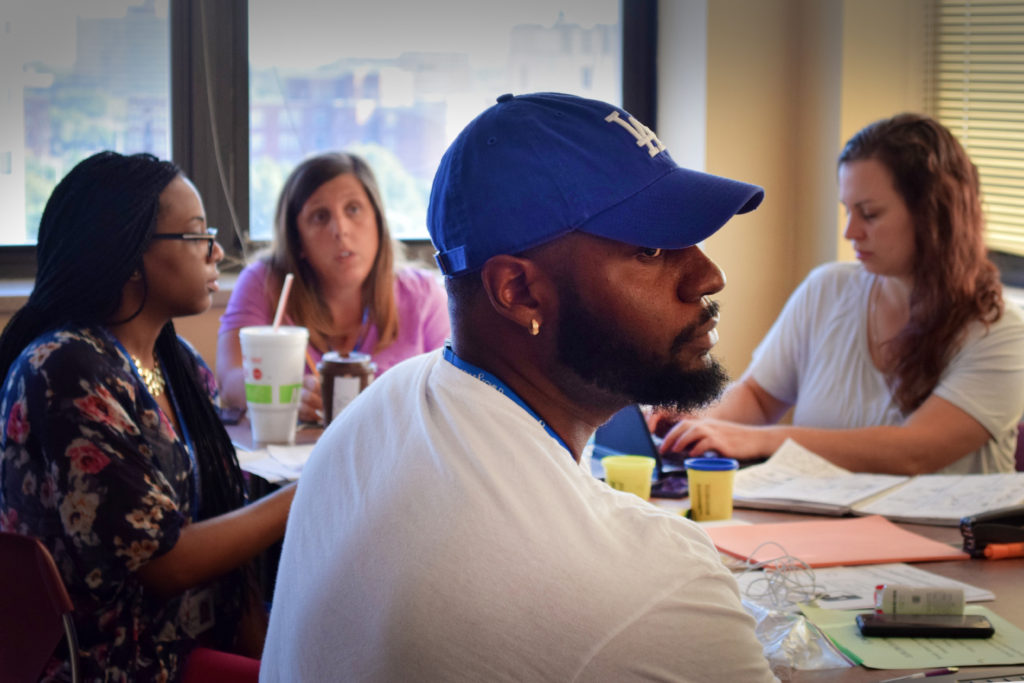
Team Zenith might sound like a superhero squad that fights crime and lives on a mountain, but at A&C, these individuals are simply superheroes who walk people through mental illness and drink lots of coffee. Today, Team Zenith is an iteration of a program that has existed at Adult and Child for the past 20 years. As long as the agency has provided community services to adults, Team Zenith has been there, sometimes operating under different names. “We still have a lot of clients who have actually been a part of Zenith for 15 to 20 years,” said Team Leader, AhNonda Bates. AhNonda and her colleague, Ashley Eppich, are Team Leaders and both manage teams of Skills Development Specialists. Team Zenith also employs a Community Based Therapist to provide traditional therapy sessions and a Peer Recovery Specialist who has dealt firsthand with the issues clients face and can counsel from experience. At the core, Zenith is dedicated to providing skills development and community based treatment to adults with serious mental illness. For Skills Development Specialists, that means driving around the metropolitan area, meeting with clients in their homes or anywhere they can. It means driving people to doctor’s appointments or the grocery store. It means counseling clients one-on-one about how to manage finances or find new housing. It means making sure a client understands as much as they can about their mental illness & medications, and being there in the moment to help them use coping skills. “Because of their mental illness, it’s easier for us to go to them rather than them coming to us… [Our Skills staff] could literally be teaching [clients] almost anything,” said AhNonda, who speaks highly of the hard work and flexibility of the team. And there is no typical day for Team Zenith. Much of the work is handling a constantly moving caseload of clients who all have different needs at different times. Crises also happen on a fairly regular basis. If a client suddenly loses housing or has their medication stolen, the staff often has to work quickly and adapt on the fly. Clients usually enter the Team Zenith caseload by way of referrals. Common sources are A&C’s Homeless and Housing Resource Team outreach, the Wheeler Mission, Valle Vista, and Community North, who often refers patients recently released from hospitalization. Sometimes there are referrals from friends or family members familiar with the program themselves. Once a referral is made, Team Zenith often uses Open Access times to serve as an intake for new clients to get them into service faster. Team Zenith is a service line that takes the title of ‘team’ to heart. Dealing with seriously mentally ill patients on a day to day basis is never easy and never linear. Relying on other members of the team is sometimes a necessity. AhNonda spoke about a client who lost her Skills Development Specialist and because of her connection and rapport with that client, AhNonda became her primary contact while also serving as Team Leader. Because of this client’s precarious emotional state and tendency to self-harm, it took considerable effort on AhNonda’s part to keep moving her in the right direction. In the toughest times, she’d have to drop everything at the office and drive to Adult Transitional Living to coax her out of a downward spiral of self-harm. This is a true example of embodying the spirit of their work. While many clients progress differently, the goal of Team Zenith is always to move people forward. AhNonda’s client, still with A&C, has not been hospitalized since February, a huge accomplishment for her. Putting in the hard work to help clients reach independence and management of their mental health, is what keeps Team Zenith on the streets of downtown Indy responding to calls of crisis and need. “The work that we do is really important,” said AhNonda. “Whether it takes two years or twenty years, [the result] just really shows that what we do is important to somebody.”