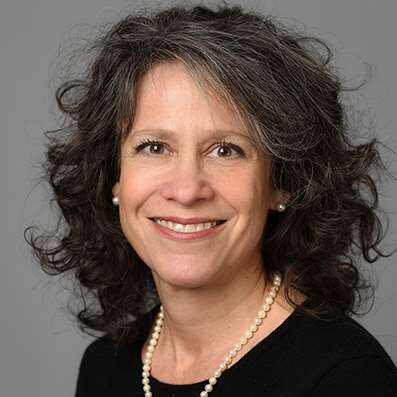
How Our Assertive Community Treatment Team is Helping the Homeless

When Cory Britton was 5 years old, he already knew he was different from the other kids. But not in a physical or obvious sense. It certainly didn’t look like a homeless life awaited him. “I felt I was different from everyone else,” said Cory, who’s now 22. “My mood swings, and how I would cope with different things. My mom didn’t know how to deal with it. She told me to pray and hope for the best. It was pretty rough. I didn’t understand me and what was going on, but I knew something was wrong.” RELATED CONTENT: Overcoming Trauma: The Power Behind Skills Development and Therapy Cory was looking up ADHD at age 10, thinking that might have been his issue. He came from a family that encouraged prayer and working through problems. That wasn’t working for Cory. By age 17, he was diagnosed with depression. He received a bipolar disorder diagnosis shortly thereafter. Cory was well-adjusted enough that he was able to enroll at Central State University in Wilberforce, Ohio, but that didn’t last. He dropped out of school, and was homeless for about four and-a-half months. RELATED CONTENT: A&C Launches Telehealth to Serve Wheeler Mission Guests How A&C helped Cory and other homeless clients Eventually, Indianapolis’ Coordinated Entry System referred Cory to A&C, where he met our Assertive Community Treatment (ACT) team. The group was formed in 2020 and serves clients with significant mental health needs that have impairment in their functioning. “It’s a barrier to them being able to access things that you and I would take for granted,” said Tiffanie Barnes, Team Leader. The team currently has 39 clients, including Cory. The team of nine has helped house about half of its caseload so far. “It’s amazing that we are able to do that,” Barnes said. “We want to continue to introduce people to housing and we would like to grow our caseload and offer our services to more individuals.” Each client is a team effort, but Alison Ruess and Abigail Wainman work most closely with Cory, and both have been amazed at his progress. “It’s been inspiring to see Cory reach a goal,” Ruess said. “He wanted to spend more time with his mother and he’s spent multiple weekends with her since then. He’s working with the employment specialist in the team to help him find a job.” “It’s very inspiring,” Wainman said. “I’m the same age as Cory and I could not imagine going through what he has been through. I love working with Cory.” The team helped Cory obtain an ID and Social Security card, but his therapists credit him with most of the improvements he’s made. “He’s been meeting us consistently on a weekly basis to do these IMR (Illness, Management and Recovery) sessions,” Ruess said. “Cory has done his home practice where you talk about what you’ve learned with someone. He’s really accomplished all of that.” What’s next for Cory Now, Cory is affiliated with the Blue Triangle Program, which is designed to provide safety, security and comprehensive health care for people who are experiencing homelessness, and help them rebuild their lives. He’s looking for permanent housing, and he eventually wants to return to college and start his own marketing firm. “Just be open to it,” he said, offering advice to anyone who’s homeless and considering getting help. “When I first heard about it, I was very reluctant because I don’t like talking to people as much. It can change your life and put you in better places. They help with anything and everything I need. “I was homeless before coming here. That really shaped me a lot. I was on the street for 4.5 months. When I first met with A&C, they were commending me on how strongly I handled the situation. I definitely had help, but no one’s supposed to survive in those circumstances. I came out stronger than I was.” Do you know someone who’s experiencing homelessness? Our Homeless and Housing Resource Team could help. Call 1-877-882-5122 to learn more. Would you like to donate to our mission? Here’s how you could help our homeless or other programs.
Why School Reopening Might Be Challenging for Your Students

As we return to full-time in-person school reopening, we might be tempted to think our students will easily transition back to their pre-March 2020 lives. As we’ve come to discover in recent weeks, that isn’t necessarily the case. Lindsay Alexander, Beech Grove School Based II Team Leader with Adult & Child Health, has witnessed this phenomenon firsthand. She completed her Masters in Clinical Psychology from the University of Indianapolis. She has since focused her mental health career in children and adolescent psychology. Lindsay is passionate about increasing protective factors in youth to decrease the risk of suicidality, working with caregivers in the family setting, and utilizing play therapy with younger children. She shares her thoughts and expertise on the topic below: RELATED CONTENT: Adult & Child Health Receives $321,000 Grant from Lilly Endowment to Support Youth Services Under COVID-19 The Return to Normal Isn’t All That Normal Many parents and educators have asked us how to best prepare their child or student for the change from virtual learning, to hybrid learning, to back to the traditional learning setting and school reopening. We have affectionately been calling this phase the “return to normal,” but it seems our kids may not be adapting well to these back-and-forth changes. We know our local schools have been working tirelessly toward doing what is best for their students in their district, and educators have been feeling the stress to “return to normal” learning. During this time of change, there can be shifts in a child’s emotional and behavioral language in the classroom and at home. Many parents expected their child to embrace more hours in the physical classroom, and to have joy regarding some recent changes. Mental health providers have found the opposite to be true, and at our one-year mark of the pandemic, our children are exhibiting more signs and symptoms related to difficulty of constant adjusting. What to look for during school reopening Some signs and symptoms that your child or student may be experiencing mental health challenges related to ongoing changes over the past year include: general changes in mood, lack of optimism, anger and irritability, somatic complaints (i.e. headaches, stomachaches), difficulty sleeping, changes in appetite, sadness, and a general state of anxiety. RELATED CONTENT: See How Our Youth Development Program is Helping its Participants Excel What you can do to prepare for school reopening There are plenty of strategies we teach parents and educators to help prepare your child or student for the continued change and transition from hybrid learning to traditional learning and school reopening. Here are a few of our focal points: Validate: Validate that “the return to normal” is difficult. Many of us have used phrases like “when we get back to normal” for over a year. An 8-year-old learner has made up around one-third of their school career of waiting for this “return to normal!” For our older youth who have been engaging in a hybrid system, they may be experiencing big emotions in the back-and-forth this school year brought. Example: “I know you were looking forward to staying at home. It sounds like you are feeling very disappointed right now with these changes. It is OK to have these feelings.” Prepare: Prepare your child for change and talk to them about how they feel versus assuming how they feel. Be prepared to continue to check in with them as their feelings (and yours!) are allowed to change. Example: “I know you were really excited about going to school 5 days a week. How are you feeling about it now?” Notice: Use your noticing skills to make your child seen and heard. Examples: “I’m noticing when you come home from school, you want to take a nap every day. How are you feeling?” “A few weeks ago, you were very excited about a project at school. I notice you haven’t talked about that recently.” Model: Model how to manage the big feelings and make a point to say how you are feeling and why. Example: “I was really looking forward to seeing my friend for their birthday how we do every year. I am really sad that I am not able to do that. I think I could call her on video chat today and listen to our favorite music to spend time with her instead.” Focus on what you can control and stick to your routine Many of our routines have been flipped upside down this year. But healthy bedtime routines are still a must for your child. Make sure your child is getting enough sleep. Lack of sleep can drastically affect the ability to cope with even minor changes. Create a routine that works for you at home. This could include adding time when the whole family can be together when possible. As we continue with school reopening, we still have some unknowns despite the goal of “returning to normal” fully by the beginning of next year. Continue to be honest with your child in an age-appropriate level and check in about their feelings. Example: “I’m not sure exactly what school will look like next year. What are some things that concern you?” In my career in mental health, I have had the opportunity to read many books on parenting and parent young children myself. I seem to have forgotten to buy a “How to parent during a pandemic” book. I have found that the best advice continues to be build connection and empathy with your child. You are doing a great job during a really difficult time. RELATED CONTENT: Adult & Child Health Receives Kendrick Foundation Grant to Provide Support for Morgan County Students in Response to COVID-19.
ADULT & CHILD HEALTH EXPANDS FOCUS ON PEDIATRIC CARE
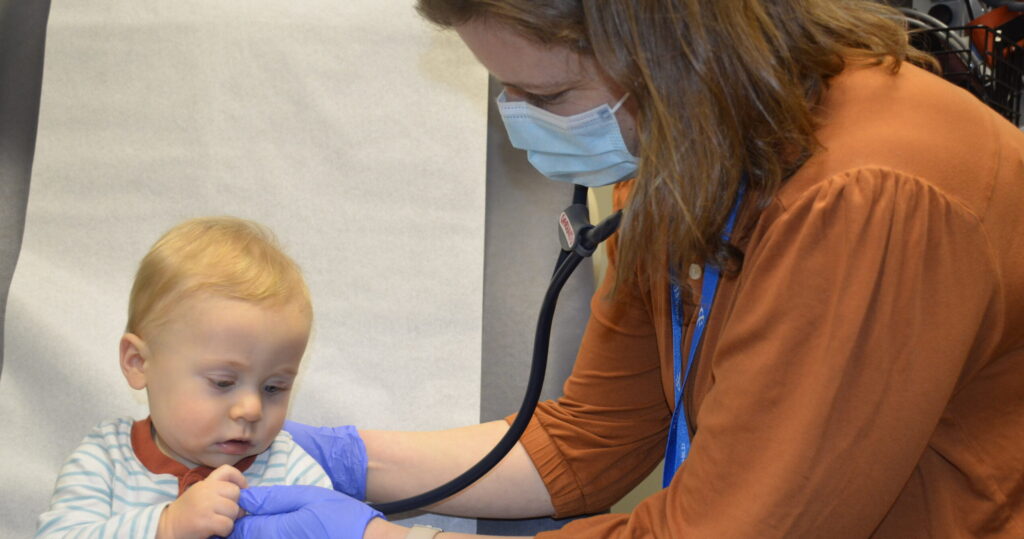
INDIANAPOLIS (March 3, 2021) – Adult & Child Health (A&C), a Federally Qualified Health Center (FQHC) Lookalike, expanded its historically behavioral health-focused services into family medicine by opening four health care clinics in 2016 and 2017. Due to demand, A&C Health is broadening its focus to include more services to the pediatric population and Marion and Johnson counties. A&C, operating three primary care clinics in Indianapolis and a fourth clinic in Franklin, recently welcomed Dr. Melissa Collier as Associate Medical Director for Primary Care. Dr. Collier is a board-certified pediatrician who has worked for the CDC and for the Indiana State Department of Health (ISDH). Dr. Collier has extensive experience as a health care leader and a pediatric clinician. “We’re so happy to bring such an experienced pediatrician on board at A&C,” said Dan Arens, A&C Chief Operating Officer. “Dr. Collier is amazing with patients of all ages and her vision for pediatrics integrates well with A&C’s behavioral health and social service programs we have for youth.” Under Dr. Collier’s clinical leadership, A&C Health is accepting new pediatric patients at each of their clinics with additional medical support from a strong team of Advanced Nurse Practitioners. 222 E. Ohio St., Indianapolis: Dr. Melissa Collier and Tracy Moseman, MSN, FNP-C 234 E. Southern Ave., Indianapolis: Dr. Melissa Collier and Jennifer White, MSN, NP 8320 Madison Ave., Indianapolis: Dr. Melissa Collier and Kim Douglas, MSN, FNP-C 1860 Northwood Plaza, Franklin: Dr. Melissa Collier and Hope Lowhorn, MSN, FNP These recent physician and nursing staff additions reflect A&C’s commitment to pediatric care and the organization’s focus on providing affordable integrated health care services to persons of all ages. A&C’s primary care clinics offer a wide range of services to ensure our clients stay on track for long and healthy lives. In addition to pediatrics, A&C’s services include physical health exams, sick visits, chronic conditions, immunizations, medication-assisted treatment for addictions, psychiatric services, on-site lab work, and women’s health services. RELATED CONTENT: Adult & Child Health Awarded $3.9 Million in Grant Funding for Mental Health and Substance Abuse Services Expansion “Adult & Child Health is excited to be increasing our focus on pediatric care,” said Dr. Christine Negendank, A&C Chief Medical Officer. “Children deserve a medical home where care is accessible, family-centered, comprehensive and compassionate. Whole health care for the child benefits not only the patient but also the patient’s family and the community at large.” Adult & Child Health is a community mental health center and Federally Qualified Health Center (FQHC) Lookalike that offers primary care and behavioral health services. We strive for caring communities, where every child, adult and family have the opportunities they need to live healthy, happy, productive lives. For more information about Adult & Child Health programs, please contact Adam Wire, Marketing and Communications Specialist, at 317-882-5122.
ADULT & CHILD HEALTH AWARDED $3.9 MILLION IN GRANT FUNDING FOR MENTAL HEALTH AND SUBSTANCE ABUSE SERVICES EXPANSION
Grant Will Establish Adult and Child Health as a Certified Community Behavioral Health Center INDIANAPOLIS (Feb. 9, 2021) – The Substance Abuse and Mental Health Services Administration (SAMHSA) has announced Adult and Child Health (A&C) has received a two-year, $3.9 million grant to expand and enhance behavioral health services in Marion and Johnson counties. This grant, funded in part by the CARES Act, enables Adult and Child Health and nine other Indiana centers to operate as Certified Community Behavioral Health Centers (CCBHCs). With the additional funding, A&C will implement more comprehensive mental and substance use treatment by adopting CCBHC service standards – an integrated and financially sustainable model for care delivery. Created by the National Excellence in Mental Health and Addiction Treatment Expansion Act, the purpose of the CCBHC program is to increase access to mental health and substance use treatment while also treating co-occurring primary care concerns. RELATED CONTENT: Adult & Child Health Receives $321,000 Grant from Lilly Endowment to Support Youth Services under COVID-19 “We’re grateful to SAMHSA for the award and to our partners at the state for supporting the CCBHC model of care, said Allen Brown, President and CEO of Adult and Child Health. “Indiana is leading with the number of mental health centers that have CCBHC designation. We’re confident outcomes will show that the CCBHC approach is a superior model for the mental health and addictions safety net.” As a CCBHC, A&C’s services will include same-day behavioral health care, mobile crisis services, treatment with medication for opioid use disorder, primary care health screenings, community-based treatment, case management and care coordination with community partners that serve veterans, children, and those involved with the justice system. “The grant couldn’t come at a better time for A&C. Along with the COVID-19 hardships people are facing, we’re seeing record levels of depression, anxiety, and addiction,” said Dan Arens, Adult and Child Health’s Chief Operating Officer. “This funding creates access to critical services for the people who absolutely need it the most.” Target populations for CCBHC services include individuals with serious mental health or addiction, including opioid disorders; children and adolescents with serious emotional disturbance; and individuals with co-occurring physical health disorders. CCBHCs provide person- and family-centered services to any individual in need, regardless of their ability to pay or their place of residence. Adult & Child Health is a community mental health center and Federally Qualified Health Center (FQHC) Look Alike that offers primary care and behavioral health services. We strive for caring communities, where every child, adult and family have the opportunities they need to live healthy, happy, productive lives. For more information about Adult & Child Health services, please contact Adam Wire, marketing and communications specialist, at 317-882-5122.