How Blue Triangle helped a homeless man recover
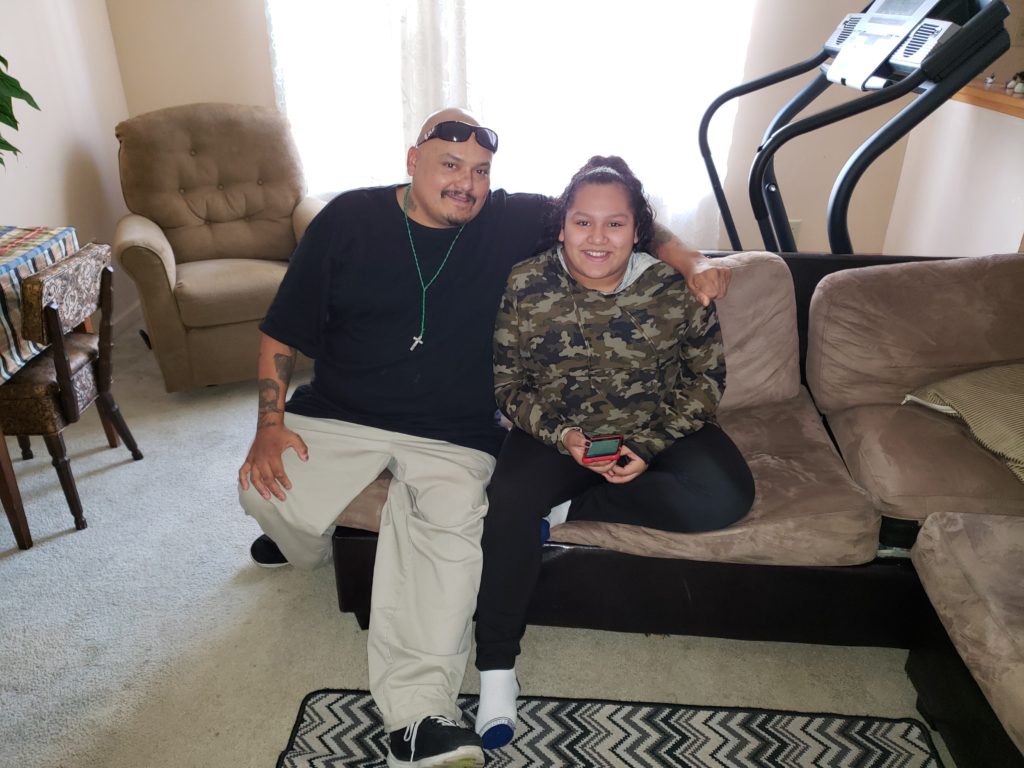
Luis Rios and his daughter, Jenaveve, relax outside the home where Rios’ wife, Griselda, lives. Like lots of folks, Luis Rios has a countdown calendar on his cellphone. The Indianapolis resident received an alert Nov. 20 from the calendar that reminded him how far he’s come. “You have been clean and sober for 13 months,” it said. “I would have never expected things to be like this,” Rios said that day, from his wife’s Indy home. “I don’t have a job yet, but I’m going step by step, slowly. I’m doing something. My wheels were spinning for a few months. I was sober and clean, but I wasn’t doing anything. I developed a lot of patience.” What’s Rios doing? He’s taking classes to become a recovery coach. He figures his firsthand addiction experience, and his recovery through the Blue Triangle program, which Adult & Child Health supports, helps him relate to others who are battling addiction or homelessness. He’s dealt with both. “I lost my family,” Rios said of his time on the streets. “The most painful part was I lost my daughter. She would hang up the phone, pretending the line cut out. That really really hurt. I’ve got them both back now (wife, Griselda, and 11-year-old daughter, Jenaveve). I’ve got the respect of them. Instead of focusing on relapsing, I’m focusing on helping others.” RELATED CONTENT: Learn more about Adult & Child Health’s Homeless & Housing Resource Program How Blue Triangle battles the homeless problem The program is designed to provide safety, security and comprehensive health care for people who are experiencing homelessness, and help them rebuild their lives. Partners in Housing owns the building, Adult & Child Health and Anthem provide staffing to the tenants, and the City of Indianapolis pays for their room and board. Rios discovered the program in September 2017, when he decided it was time to get help. He stayed in the house for two days, then entered Valle Vista Hospital in Greenwood for a week of treatment. He then returned to the Blue Triangle, where he has lived ever since. Rios and the other residents can access a food pantry, transportation information and other resources at Blue Triangle. Rios said Amanda Wills of Anthem placed him on the list for Blue Triangle housing, and he still speaks with her once every couple of days. He also works with Adrianne Harris at Adult & Child Health, his outpatient therapist for addictions treatment. She meets with Rios twice monthly to make sure he’s following his treatment plan goals and maintaining his recovery. “Luis is a huge success,” Harris said. “After opening up about where he has been and what he has gone through, he works hard every day. I am so proud of him for following pursuit on becoming a certified recovery coach. Luis’ desire to give back to others in need is a true testimony of the hard work that he has put into himself and his program.” (video courtesy of Anthem) What’s next for Rios He currently spends a little over half his time at his wife Griselda’s house, and the rest of the time at Blue Triangle. He recently received a scholarship to become a certified recovery coach. Rios is keeping his employment options open, but mentioned he’d like to work in an emergency room at a hospital. Several local hospitals have positions where employees inform overdose patients or other drug-related patients about resources such as Blue Triangle. “I’ve always been the type to help people, even in my past days,” he said. “It hurts to see a lot of people and a lot of friends that are in the past, and they’re still stuck, and there’s nobody to help out. I want to help them. I want to help anybody that needs it.” Harris said Rios is following through on all of the program’s requirements and reports no challenges with his recover. She believes Rios serves as a great example of what can happen when clients utilize Adult & Child Health’s resources during their recovery paths. “He is a living testimony of what can happen if you focus and work through hardships,” she said of Rios. “He is living proof that recovery IS possible.” RELATED CONTENT: Learn more about Adult & Child Health’s Transitional Living Program.
Spotlight On: Wraparound Services
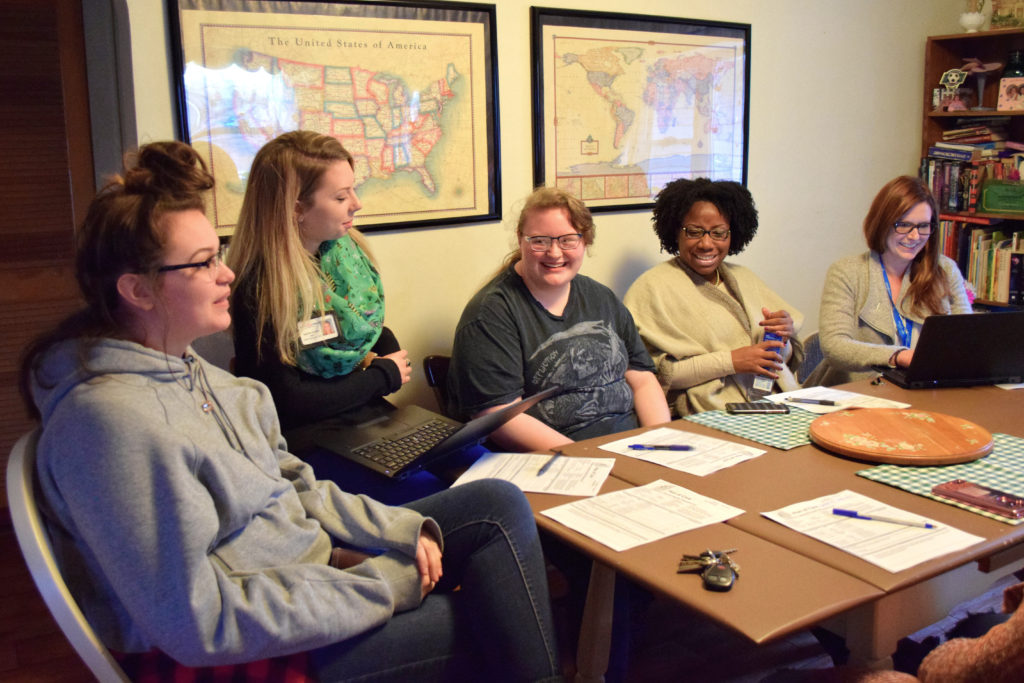
(Editor’s note: Names have been changed to protect anonymity) This team will laugh often, require respectful communication from each other, laugh again. This is the mission of the Smith family’s Wraparound Services team. On a Monday evening, they all circle around the family’s kitchen table for a Child and Family Team Meeting. They talk and joke like they’re about to share a meal together. They’re all here to support Ashley, the Smiths’ youngest daughter. She has battled anxiety, self-harm, disordered eating, a suicide attempt, and withdrawal from school, all within the past year. They’ve pulled up chairs, distributed paper packets, and someone tosses the first question into the mix like a beach ball: “What’s gone well this month?” RELATED CONTENT: See how Adult & Child Health’s Youth Development team offers and if it’s a good fit for your child What are Wraparound Services? This strengths-based and positivity-based program has been embedded within Adult & Child Health for a long time, catching some of the most severe at risk youth cases. That said, Wraparound Services are bigger than Adult & Child. It’s an internationally used model of care that embraces severely unstable kids, not letting go until they can stand on their own. Youths ages 6 through 17 connect with this program through a multitude of referral sources: local psychiatrists, residential facilities, Department of Child Services, and any Adult & Child service line. A large majority of referrals come from A&C’s School Based service. A&C has two Wraparound teams, one in Johnson County, one in Marion County. The Johnson County team is the exclusive provider in its area, but Marion County has three other agencies that provide Wraparound: Midtown, Aspire, and Gallahue. But it’s never been a competition among the Marion County providers. Until recently, when Gallahue relocated, All Wraparound providers work together and collaborate out of the same 603 E. Washington St. location. RELATED CONTENT: See how Adult & Child Health’s Open Access program can assist those with mental health difficulties Each A&C team has a Leader, a Lead Clinician, a group of Facilitators, and an Access Coordinator who acts as a gatekeeper, making sure potential clients meet the criteria. Since Wraparound involves so many support sources, the providing agency constantly works with outside entities and independent providers to create the perfect social and supportive network for a family to heal. How do Wraparound Services work? Elaine Trepanier, Marion County Lead Clinician and Wrap Facilitator, facilitates for the Smith family. Her job is to lead and manage the entire team through the entire process. Ashley’s team consists of her mom, dad, grandmother, sister, A&C Wrap Therapist Sophie Foster, and a Habilitation Provider. This person helps her to work on skills and interact with the outside world. A Family Support and Training Provider also works with the parents and family to understand diagnoses and give parenting tips. Elaine’s earnest admiration for this family shines through when she talks about Ashley’s case. “She hasn’t gone to school in a year, and she just started to go again one to two days a week,” she said. “It’s brilliant. She’s got such a great, sarcastic sense of humor. I love this child.” “The coolest thing about Wrap, I think, is that it’s all based on family voice and choice,” said Lisa Kress, Wrap Team Leader for Johnson County. This means the family gets to choose every person they work with throughout the process. Who oversees Wraparound Services workers? The Indiana Division of Mental Health and Addiction certifies everyone who works in Wraparound. An agency employs the facilitators, but there are many different types of independent professionals who are also certified in the Wrap process. Those individuals earn a spot on what’s called a “pick list.” This is a reference guide for families to look through providers and pick who they think might be right for them. A facilitator can set up interviews and meetings to help them choose. The family can switch providers at any point, including agency people. This helps them develop the best team possible and lets the clients wield more control over their recovery. Most teams consist of a therapist, a Habilitation Provider (Hab) and a Family Support and Training provider (FST). Other important people in the youth’s life can also join the team as natural supports. How ‘Ashley’ utilizes Wraparound Services Ashley’s grandmother is her natural support on the team . She was the only family member Ashley allowed to stay in the room while practicing her slam poetry piece after the CFT meeting. “That’s the thing about Wrap,” Trepanier said. “You get to be creative in ways other types of services don’t.” Ashley attends salsa dancing lessons and Inner Beauty workshops and writes slam poetry. She has also attended yoga sessions with Elaine and Tiffany Covele, Marion County Wraparound team leader and Ashley’s habilitation provider, as part of her Plan of Care. The Wraparound Services team is essentially extended family you get to choose. It’s a path to healing you get to alter at any point. “It’s an in-depth process,” said Lisa Kress, a team leader for Johnson County Wraparound. “(There are) Lots of meetings, lots of past info. We build on what went well, we push you outside your comfort zone, but you have a team behind you and you’re never alone. I always say, ‘If you don’t like something, we can change it … When you remind people of that, you can see that sigh of relief.” The strength of Wraparound Services seems to be its strength-based philosophy. “We build on what’s gotten the family through tough times before,” Trepanier said. How Wraparound Services turns negative circumstances into a positive environment Families who come into the program are struggling. They’ve suffered a lot. But the Wraparound Services process often seems like a celebration, even during crisis. It’s almost a mindset. Families celebrate every victory. They focus on what’s going right instead of what’s going wrong. You follow your passions. Then, you discard things not meant for you.
Spotlight on: Job Links
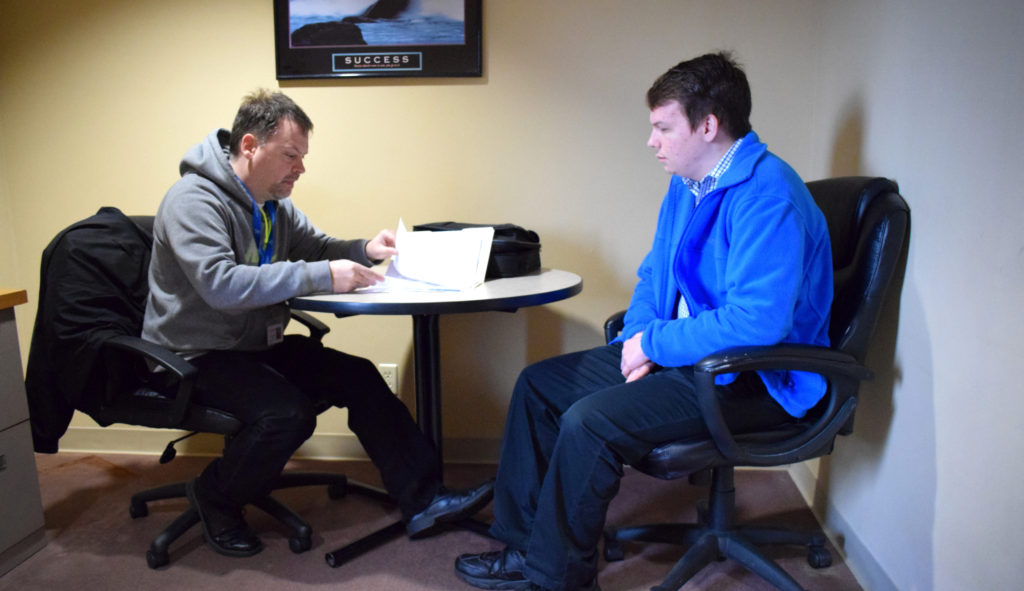
Anyone who has conducted a job search knows it’s not easy. The fill-out-an-application, go-to-an-interview, get-hired progression makes it seem simple, but it it’s not. For the marginalized populations Adult & Child Health serves, a job could mean the first foothold onto a more stable life. Layers of mental illness, disability, or injury, however, are hurdles that are difficult to clear alone. A&C’s Job Links program serves as a link into the employment world. Its mission is to find jobs for those who need both a partner and an advocate. How does Job Links help your job search? The Job Links team includes a team leader and a seven-person employment staff. Five employment specialists work in the community along with a full-time career coach, and three of the five employment specialists also work as career coaches. Employment Specialists manage a caseload of clients. They work with each person to determine and execute the best method to achieve lasting employment through a job search. Though new, the school coaches are an important addition to the team. After a yearlong process to establish the program, specialists are currently making waves with high school-aged clients. School coaches work with students who have Individualized Education Plans, 504 Plans and disabilities. This helps them prepare for college & careers. “I get tons of great feedback about the work they’re doing in schools,” Team Leader Carla Orr said. The school coaches have also begun working with School Based teams, encouraging collaboration and generating referrals. All team members work with clients 1-on-1, building a relationship along with a resume. This often begins with a get-to-know-you phase where a coach digs into a client’s personality, interests, and struggles. They ultimately want to help their clients get their dream jobs. First, however, they focus on each milestone and manage setbacks as they come. It’s the most sustainable method of working through the program. Click here to learn more about how to participate in the Job Links program. How Job Links helped John Witcher “I spend the majority of my time out in the community,” said John Witcher, an employment specialist who has worked at Adult & Child for more than a year. “I had a client do a work experience session at Goodwill where I go in and observe them on the job for a couple hours. (We want) to see, before we place them, do they have enough stamina? Does it look like they have any knee or back pain? Can they get along with others? I do a lot of work to build relationships with local businesses. You don’t want to set somebody up to fail.” This work isn’t just a job to Witcher. It’s a calling that’s rooted in personal understanding of how much the team’s job search expertise can offer people. His A&C journey first started decades ago, as a Job Links client. “I work very very hard at what I do because that used to be me on the other side of the table,” Witcher said. “I take it personally, I’m in it to change lives.” RELATED CONTENT: Learn more about Adult & Child Health’s Open Access program for patients who are suffering from mental illness Through working with Job Links as a client, he found and sustained a steady job for 16 years. He then went on to earn an MBA and eventually returned to Adult & Child, this time as a Job Links Employment Specialist to give back to the program that meant so much to him. “When I first came in contact with Adult and Child in 1994, I was just a scared person with a mental illness,” Witcher said. “A lot of very great people have helped me out along the way and I plan to do the same.” ‘I believe everybody can do something’ Orr describes the client-coach relationship in a job search as a type of partnership. That approach seems to help clients retain the jobs they get more often by helping foster a sense of accomplishment. “I want to work as hard as you do to find a job,” she said. “There may be things that you can’t do or aren’t able to do for certain reasons, but I believe everybody can do something.” Orr and Witcher agree that one of the most difficult parts of the job search is battling the stigma around mental illness & invisible disabilities. Disability inclusion has improved in recent years, it could still be better. Breaking down those barriers with employers is imperative to creating opportunities for clients. Orr said her teammates have a social worker’s heart, but also, “they have a marketing and PR ability that necessitates a lot of the work they do. If you can’t go out and talk to employers or if you’re too shy to present in front of a business, you’re not going to be able to develop a specific niche job for someone or an opportunity to shadow,” she said. Team members take pride in educating employers, championing their clients, and working creatively to generate unforeseen opportunities. Job Links’ funding challenges Historically, Job Links maintained a strong relationship with the state’s Vocational Rehabilitation Program, which provided most of Job Links’ clients and funding. VR funds job-specific services to people who qualify based on disability, injury, and/or mental illness. But recent changes in the VR program have drastically tightened its eligibility and shifted the pay structure, hitting Job Links hard. “When I first started, I had about 90 percent VR clients,” Witcher said in April. “Now it’s about 50 (percent).” Currently, Witcher said VR clients account for only about 20 percent of the caseload. They work primarily with A&C clients who are also participating in VR services. This change shocked the program financially and in a practical sense. VR gives Job Links the opportunity to bill for its exact purpose: career coaching and all career-related items. Working with other funding sources tempers Job Links’ ability to bill directly for career-related coaching. How Job Links is working around
Spotlight on: Open Access

You have mental illness and it’s time to get help. Your research led you here, dialing the number to the Adult & Child Health main line. The number on the screen stares back at you. Pressing “send” feels like stepping off a high dive, anxiety fills your senses. Someone answers the phone, you give a stumbling explanation about what mental health services you think you need, and the person on the other end of the line transfers you to an access screener. “This is Katie, how can I help you?” As an Open Access Screener, Katie McClelland’s goal is to make sure potential clients fit into A&C’s services. This helps to ensure they don’t have to turn people away for mental health services. They also answer questions, give information, and prepare a client chart that’s waiting for them when they come in. To Katie, it’s vitally important to also offer alternate community resources to clients who don’t fit A&C’s services. “I have had many people thank me tremendously for this and explain to me that when they call other places they’ve just been told ‘we don’t offer that’ and then quickly rush them off the phone,” Katie said. “People really appreciate when you take the time to talk with them and really help, even if it means referring to another agency for assistance.” Nerves raging, you stumble on your words, asking questions and giving answers, but Katie speaks soothingly, reminding you there are no commitments and you can come in whenever you’re ready. She ends the call saying, “I’m really glad that you called today, and please call me back if you have any questions or concerns about anything at all.” A friend drops you off at the front doors of 8404 Siear Terrace, the site of the clinic. You take a deep breath and follow the signs to Open Access. Second floor, down the hall, through a glass door. Floor General Melanie Owens smiles at you over the reception desk. She pulls up the chart Katie created during your call. Forms and papers in hand, you sit down in the waiting area with a pen and start scrawling out your home address. “There are a lot of moving pieces, and it changes minute by minute,” said Melanie, who’s in charge of making sure the whole department runs smoothly and effectively. All those moving pieces? It’s her job to arrange them into a complete puzzle. Her daily duties involve managing the schedules of her team and filling all open appointments as new clients filter in for the day. “There are a certain amount of spots based on how many clinicians are here,” she said. “And it’s different every day.” Since Open Access by virtue of its name includes walk-in appointments, you never know who will visit on any given day. For the most part, no one schedules appointments until a patient comes through the door looking for services. The position can be challenging because of the limited number of intake spots. There’s no way to know how many people will come in for mental health services. The only scheduled appointments are for people who are discharged from psychiatric hospital stays. In theory, this is provides a smooth transition from the hospital environment into stable relationship with a service provider. However, these preferred appointments rarely show up. “When we have a no-show, I quickly fill that spot with a client that walked through the door looking for services,” Melanie said. Sometimes it’s a two-day process because the clinicians schedules have already filled for the day, “but I encourage them to stay and fill out their paperwork and then the next time they come in, I put those clients in ahead of others who haven’t been here before.” The difficulty of coordination and triage ebbs and flows depending on various circumstances. Fridays at 8404 Siear Terrace Open Access are often busiest, because clinicians who are based in other locations will come in to assess clients. Some days, clinicians from the 8320 Madison Ave. office will offer their canceled appointment times to help with intake. Melanie oversees the whole chaotic enterprise. “People do tend to get stressed when they have to help me out, but I don’t mind it,” said Melanie. “I just like helping people. When things pop up, I like to jump in.” For registration, you’re taken back to a small office where a registrar combs through your Clinical History Form, inputting your information into the computer system. She asks a few more questions, and schedules you for an appointment with Anders Kilmark. Anders Kilmark is the lead clinician at 8404 Access. His role is to spend time digging deep into the needs of these new clients and connect them to the mental health services that are best suited for their goals. He operates both the front line and oversees the department, taking his role as an advocate for his coworkers seriously. But in his intake role, he needs to be ready for anything. Melanie and the registrars consider a clinician’s credentials when assigning clients, but there is still a wide range of cases that could wind up in their office, from ADD to addiction, from DCS referrals to schizophrenia. Anders spends an hour with you, truly trying to understand the struggles you’ve had recently. He says he knows a therapist at A&C’s location across the street who will be perfect for you. A little flicker of hope ignites in your chest. Matching clients to teams is a scientific skill, but also an art. Clinicians need to remain thoroughly informed on the services and evolutions of each team to make the most informed decisions. “Part of what we do is educating ourselves on the agency itself, knowing various services, what issues and demographics are appropriate, what barriers disqualify,” Anders said. But each case is unique and there are no formulas for success, only patterns. Sometimes, A&C creates new patterns to confront unique challenges. Anders offered up a story of a